


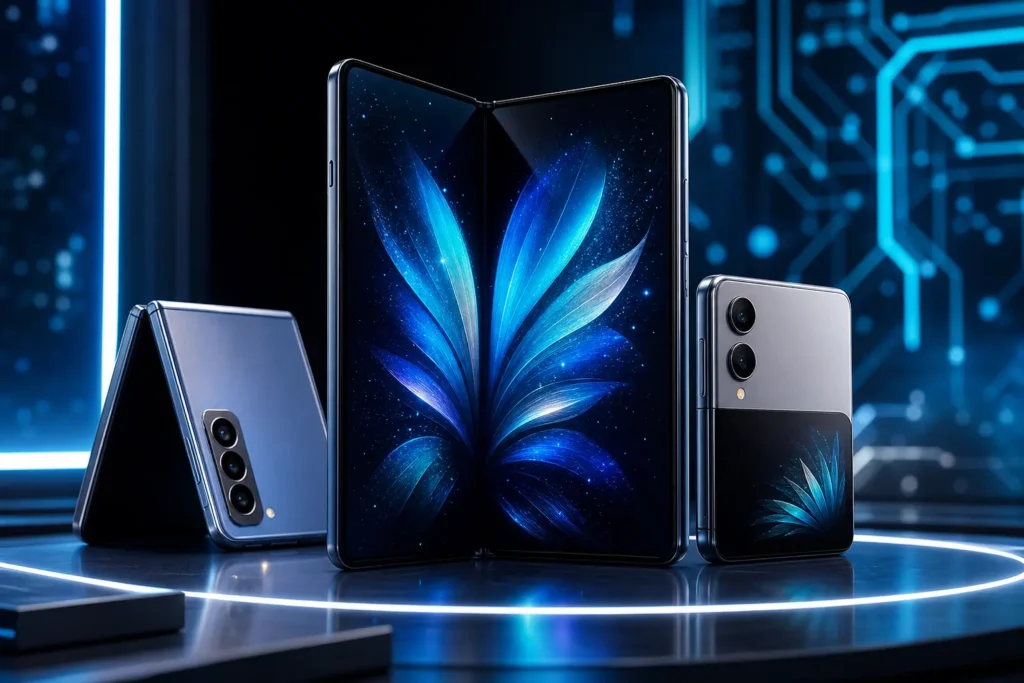
The Evolution of Foldable Phones: From Gimmick to Game-Changer
When Samsung first introduced the original Galaxy Fold in 2019, foldable phones felt like a futuristic concept that wasn’t quite ready for prime time. The high price tag, durability concerns, and software limitations made them a niche product for early adopters willing to take risks. Fast forward to 2026, and the story has changed dramatically. Foldable phones 2026 have matured significantly, with manufacturers addressing the core pain points that plagued earlier generations. Today’s foldables are more durable, more affordable, and more practical than ever before — but are they worth your money? Let’s find out.
The Best Foldable Phones of 2026
The 2026 foldable market is more competitive than ever, with several flagship options catering to different preferences and budgets:
- Samsung Galaxy Z Fold 7: Samsung’s latest flagship fold offers a 6.3-inch cover display and 7.6-inch inner display, designed for power users who want maximum screen real estate. Improved hinge design and enhanced multitasking features make it ideal for productivity.
- Google Pixel 9 Pro Fold: Google’s foldable leverages deep AI and software integration better than competitors. Perfect for users deep in the Google ecosystem, with outstanding computational photography.
- OnePlus Open 2: Returns to the foldable market with a refined design and competitive price point. The Open 2 offers excellent value without sacrificing performance or durability.
- Motorola Razr 2026: The iconic flip-phone form factor with modern hardware. If you prefer a compact clamshell foldable over a book-style, the Razr 2026 is a strong choice.
Durability Improvements: Are Foldables Finally Tough?
One of the biggest concerns with foldable phones has always been durability. In 2026, manufacturers have made significant improvements:
Hinge Technology: Modern hinges are engineered with enhanced materials that withstand millions of open-and-close cycles. The Z Fold 7 features an improved hinge with better sealing to prevent dust and debris from entering. Most flagships now carry IPX8 water resistance ratings, protecting them from splashes and submersion.
Screen Protection: The foldable display itself has become much more durable. New protective films are harder to scratch, and manufacturers are using ultra-thin glass alternatives more resistant to impact. Modern foldables can handle everyday use without excessive babying — though a case is still recommended.
Camera Quality in 2026
2026 foldable phones feature camera systems that rival traditional flagship phones. The Z Fold 7 includes a 50MP main sensor, 10MP ultra-wide, and 3x telephoto lens. Computational photography improvements mean excellent results even in challenging lighting. The inner camera for video calls has improved significantly with larger sensors and better autofocus — matching external cameras from traditional flagships.
Battery Life: Real-World Performance
Battery capacity has historically been a trade-off with foldables needing to power two screens. The 2026 generation addresses this with larger batteries and more efficient processors. The Z Fold 7 packs a 4,400mAh battery that comfortably lasts a full day with moderate to heavy use. Most 2026 foldables support fast charging (25–65W) and wireless charging, which helps offset the need for frequent top-ups.
Price vs. Value: Is the Premium Justified?
Here’s the reality: foldables are expensive. The Galaxy Z Fold 7 starts at $1,799. The Pixel 9 Pro Fold at $1,799. Even the more affordable OnePlus Open 2 costs $1,299. These are premium prices. For most users, the answer is: a traditional flagship smartphone does everything you need at half the price. Foldables shine when you specifically need the larger screen real estate for work, gaming, or media consumption.
Who Should Buy a Foldable Phone in 2026?
If you fall into one of these categories, a foldable could be an excellent purchase:
- You spend significant time on video calls, editing content, or using multitasking apps
- You love mobile gaming and want the largest possible screen
- You’re a content creator who needs portability with a large canvas
- You have the budget and want the cutting-edge of smartphone technology
- You’re a tech enthusiast who values innovation and novel form factors
Who Should Wait?
If you’re on a budget or unsure about foldables, waiting is the smart move. Prices tend to drop significantly in the months following new releases. As the technology matures, next year’s models will be thinner, more durable, and less expensive. There’s also the question of software optimization — while 2026 foldables have excellent support, the ecosystem is still refining multitasking for the unique form factor.
The Future of Foldables Beyond 2026
The foldable market is evolving rapidly. We’re seeing prototypes of tri-fold phones, rollable devices, and new form factors. By 2028, foldables could become mainstream rather than premium niche products. For a broader look at the latest tech releases, see our roundup of best tech gadgets from March 2026 and April 2026’s best new tech gadgets. For health and wearable technology, see our AI health wearables in 2026 guide.
Frequently Asked Questions
Do foldable phones break easily?
In 2026, significantly less than previous generations. Modern hinges are tested for millions of cycles and rated for IP water resistance. With a case, daily use is fine. Dropping on concrete can still cause catastrophic damage, as with any premium smartphone.
Is the inner screen of foldables usable?
Yes — dramatically improved in 2026. The crease in the center of book-style foldables is less noticeable when the screen is lit, and most users adapt quickly. Software optimizes app layouts for the wider aspect ratio.
Are foldable phones worth it for photography?
Camera quality is competitive with traditional flagships in 2026. The advantage is using the larger inner display as a viewfinder. The disadvantage is thickness and weight compared to traditional flagships with similar cameras.
Conclusion
Foldable phones in 2026 are finally practical, durable, and feature-rich enough to be legitimate alternatives to traditional flagships — but only if you have a specific use case that benefits from the larger screen. The technology has matured considerably, and durability is no longer a major concern for everyday use. For the right person, a foldable phone is an excellent investment. For everyone else, traditional flagship phones offer better value. The foldable market is evolving rapidly, and 2027 will likely bring even better options at lower prices.