

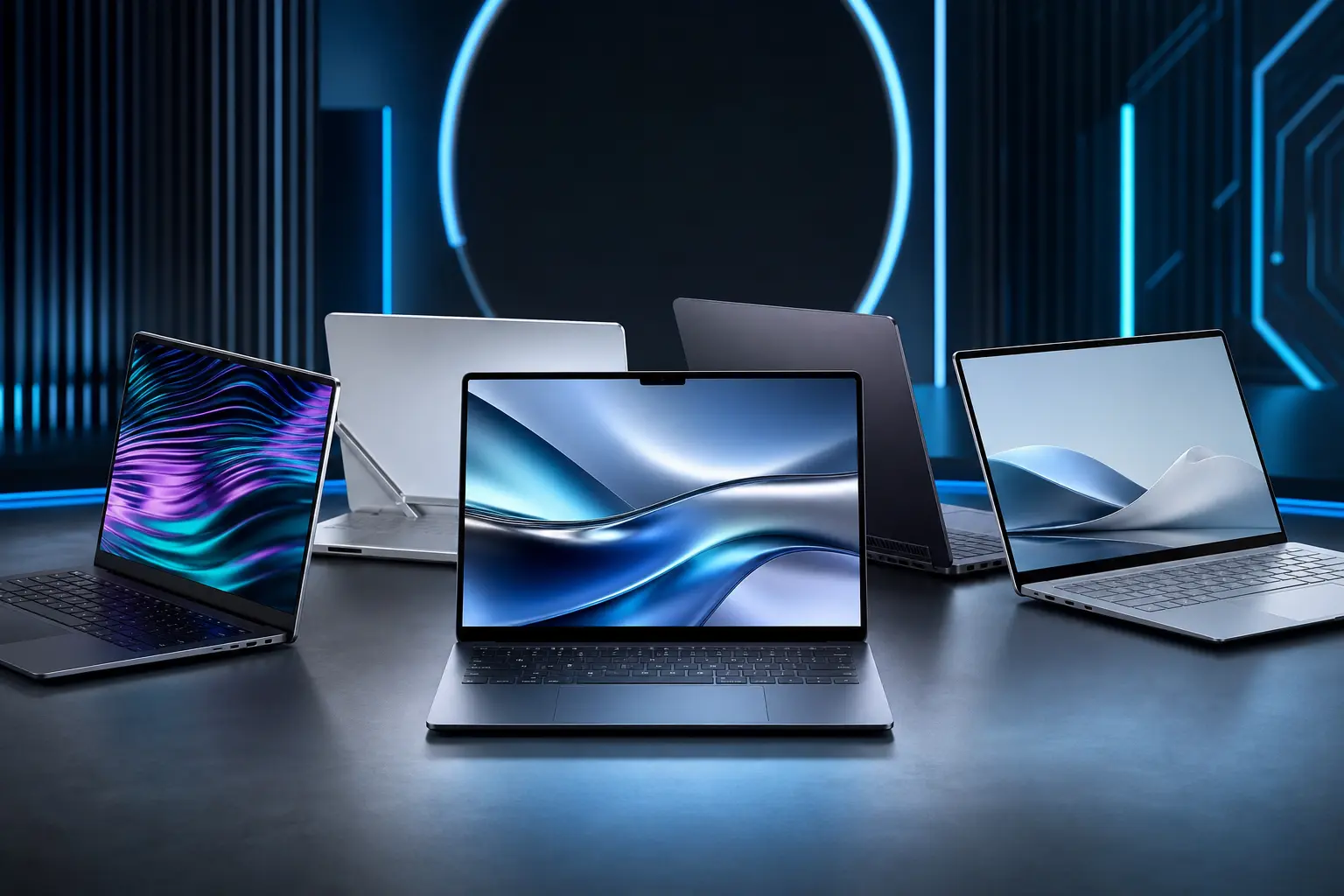
The best ultraportable laptops of 2026 have never been better. Razor-thin designs, all-day battery life, OLED displays, and powerful AI-capable chips have converged into a class of machines that are genuinely both capable and convenient. Whether you are a frequent traveler, a remote professional, or a student who carries their laptop everywhere, there is an ultraportable built for exactly your needs this year.
This guide covers the top thin-and-light laptop picks of 2026 across every budget, with an honest look at what makes each one worth considering — and where each falls short.
What Makes a Laptop “Ultraportable” in 2026?
An ultraportable laptop in 2026 typically meets these criteria: it weighs under 1.5 kg (3.3 lbs), measures less than 16mm thick, offers at least 10 hours of real-world battery life, and features a display between 13 and 15.3 inches. The best ultraportables add powerful modern processors, high-resolution displays (often OLED), and fast charging — without sacrificing the portability that defines the category.
Best Ultraportable Laptops of 2026
1. Apple MacBook Air 15-inch (M5) — Best Overall Ultraportable
The MacBook Air 15-inch with the M5 chip is the benchmark ultraportable laptop of 2026. At just 1.51 kg, it delivers performance that most Windows laptops cannot match even at heavier weights. The M5 chip’s Neural Engine handles Apple Intelligence tasks entirely on-device, the 15.3-inch Liquid Retina display is bright and color-accurate, and battery life routinely exceeds 15 hours in real-world use.
Why it stands out: fanless design (completely silent), unified memory architecture that scales to 32GB, macOS ecosystem tightness, and best-in-class performance per watt. The Sky Blue color option introduced in 2025 remains one of the most attractive laptop designs on the market.
Who it is for: Mac users, creatives, professionals, and anyone who values a silent, fast, long-lasting machine above all else.
Starting price: ~$1,299 (8GB/256GB) | Recommended: ~$1,499 (16GB/512GB)
2. Lenovo Yoga Pro 7i (Panther Lake) — Best Windows Ultraportable
The Lenovo Yoga Pro 7i with Intel’s Panther Lake CPU is the sleeper hit of the 2026 Windows laptop world. It combines a highly portable 15.3-inch form factor with a stunning OLED display, mid-range dedicated graphics (NVIDIA RTX 4060 Mobile), and Intel’s latest efficiency-focused architecture. The result is a laptop that handles creative work, light gaming, and productivity without compromise.
Why it stands out: The OLED panel is exceptional — vivid, accurate, and power-efficient. The full-size SD card reader is a rarity in ultraportables and makes it excellent for photographers. Panther Lake’s NPU meets Copilot+ PC requirements for AI-enhanced Windows features.
Who it is for: Windows power users, photographers, creatives who want OLED quality with genuine portability.
Starting price: ~$1,349
3. Dell XPS 13 (2026) — Best Ultra-Compact Ultraportable
The Dell XPS 13 has been the gold standard of compact Windows ultraportables for years, and the 2026 edition continues that tradition with a refreshed design, Snapdragon X Elite or Intel Panther Lake processor options, and a 13.4-inch OLED touch display. At 1.17 kg, it is one of the lightest premium laptops available.
Why it stands out: Exceptional build quality, the smallest and lightest premium Windows option, and a display that punches well above its price. The Snapdragon variant offers outstanding battery life for a Windows machine (14+ hours).
Who it is for: Travelers who prioritize minimal weight above all else, Windows minimalists.
Starting price: ~$1,199
4. ASUS Zenbook 14 OLED (2026) — Best Value Ultraportable
The ASUS Zenbook 14 OLED is the best value proposition among premium ultraportables in 2026. It delivers a gorgeous 14-inch 2.8K OLED display, AMD Ryzen AI 7 350 processor with dedicated NPU for Copilot+ features, and 16GB of LPDDR5 RAM at a price that undercuts most competitors by $200–$400.
Why it stands out: OLED at this price point is exceptional value. AMD’s Ryzen AI delivers strong real-world performance. The 75Wh battery supports 12+ hours of use, and 65W USB-C charging is fast.
Who it is for: Budget-conscious buyers who refuse to compromise on display quality, students who want premium specs without the premium price.
Starting price: ~$899
5. Apple MacBook Air 13-inch (M5) — Best Compact Ultraportable
For buyers who want the smallest possible premium laptop, the 13-inch MacBook Air with M5 remains an outstanding choice. At 1.24 kg and 11.3mm thin, it is almost impossibly light for a full-featured laptop. It shares the M5 chip with its larger sibling, delivering the same performance in a more pocketable form factor, with 13–15 hours of battery life.
Who it is for: Frequent flyers, students, Mac users who value the most compact form factor available.
Starting price: ~$1,099
6. LG Gram 16 (2026) — Best Large-Screen Ultraportable
The LG Gram series continues to achieve the seemingly impossible: a 16-inch laptop weighing under 1.2 kg. The 2026 Gram 16 uses Intel Panther Lake, offers a 16-inch 2560×1600 IPS display, and boasts one of the longest battery lives in the category at 17+ hours. It carries MIL-SPEC 810H durability certification, making it genuinely rugged for a thin machine.
Why it stands out: Best battery life in its class, lightest 16-inch laptop available, MIL-SPEC durability for travel confidence.
Who it is for: Users who want a large display in a portable package, road warriors who need all-day battery without carrying a charger.
Starting price: ~$1,299
7. Microsoft Surface Pro 11 — Best 2-in-1 Ultraportable
The Surface Pro 11 with Snapdragon X Elite is the best 2-in-1 ultraportable in 2026. Its detachable keyboard and kickstand design delivers genuine tablet flexibility alongside laptop capability, all in a package weighing 879g (device only). The 13-inch PixelSense Flow display supports 120Hz refresh and the Surface Pen for note-taking and creative work.
Why it stands out: Unmatched flexibility between tablet and laptop modes, Snapdragon X Elite delivers excellent Copilot+ AI features and outstanding battery efficiency, and the build quality is exceptional.
Who it is for: Note-takers, students, professionals who move between tablet and laptop modes regularly.
Starting price: ~$1,199 (device only, keyboard sold separately)
Key Ultraportable Laptop Features to Prioritize in 2026
Display Quality
OLED panels have become increasingly affordable in the ultraportable category in 2026. If your budget allows, choose OLED over standard IPS for dramatically better contrast, more accurate color, and lower power consumption for typical content. Minimum resolution should be 1920×1200 (16:10 ratio, better for productivity than 16:9) at 13–14 inches.
Processor and NPU
Look for chips that meet Microsoft’s Copilot+ PC requirements (40+ TOPS NPU) if you use Windows AI features: Snapdragon X Elite/X2, Intel Panther Lake, or AMD Ryzen AI 300/400 series. Apple Silicon (M4/M5) remains the most efficient and capable option for Mac buyers regardless of AI features.
Battery Life
In 2026, 12+ hours of real-world battery life should be the minimum expectation for a premium ultraportable. The best in class (LG Gram, MacBook Air M5, Snapdragon X Elite devices) exceed 14–17 hours. Check third-party real-world battery benchmarks rather than manufacturer claims.
Ports and Connectivity
Ultraportables inevitably trim ports to save size and weight. Prioritize machines with at least two USB-C/Thunderbolt 4 ports and, if relevant to your work, an SD card reader (rare but valuable). A MagSafe or equivalent charging option alongside USB-C charging provides flexibility. Avoid machines with only a single USB-C port.
Ultraportable Laptop Comparison: 2026 At a Glance
| Model | Weight | Display | Battery | Price (from) |
|---|---|---|---|---|
| MacBook Air 15″ M5 | 1.51 kg | 15.3″ Liquid Retina | 15+ hrs | $1,299 |
| Lenovo Yoga Pro 7i | 1.49 kg | 15.3″ OLED | 12+ hrs | $1,349 |
| Dell XPS 13 (2026) | 1.17 kg | 13.4″ OLED Touch | 12–14 hrs | $1,199 |
| ASUS Zenbook 14 OLED | 1.39 kg | 14″ 2.8K OLED | 12+ hrs | $899 |
| MacBook Air 13″ M5 | 1.24 kg | 13.6″ Liquid Retina | 13–15 hrs | $1,099 |
| LG Gram 16 (2026) | 1.19 kg | 16″ 2560×1600 IPS | 17+ hrs | $1,299 |
| Surface Pro 11 | 0.88 kg | 13″ PixelSense 120Hz | 14+ hrs | $1,199 |
Frequently Asked Questions: Best Ultraportable Laptops 2026
What is the best ultraportable laptop in 2026?
The Apple MacBook Air 15-inch M5 is the best overall ultraportable laptop in 2026, offering class-leading performance, exceptional battery life, a fanless design, and an excellent display in a sub-1.6 kg package. For Windows users, the Lenovo Yoga Pro 7i and Dell XPS 13 are the top alternatives.
What is the best budget ultraportable laptop in 2026?
The ASUS Zenbook 14 OLED is the best budget ultraportable of 2026, delivering a premium 2.8K OLED display, AMD Ryzen AI performance, and 12+ hour battery life starting at around $899 — undercutting most competitors while matching them on display quality.
How much should I spend on an ultraportable laptop in 2026?
For a quality ultraportable with OLED display, good battery life, and a modern AI-capable processor, expect to spend $900–$1,400. Below $900 you will find acceptable machines but with compromises on display quality, build, or performance. Above $1,400 you get refinements rather than step-change improvements for most users.
Is OLED worth it in an ultraportable laptop in 2026?
Yes, in 2026. OLED prices have come down significantly, and the display quality improvement over IPS — perfect blacks, superior contrast, wider color gamut, and lower power draw for dark content — is genuinely meaningful for everyday use. If you are choosing between two otherwise equal laptops, choose the one with OLED.
What processor should I look for in an ultraportable laptop in 2026?
For Mac: Apple M5 is the clear choice. For Windows: Qualcomm Snapdragon X2, Intel Core Ultra Series 3 (Panther Lake), or AMD Ryzen AI 300/400 series all deliver strong ultraportable performance with Copilot+ PC AI capability. Avoid older Intel 12th/13th gen chips in new 2026 ultraportable purchases — they are less efficient and lack dedicated NPUs for modern AI features.
 rabie tahir